Leadership And Organization Strategy
Leadership
loyalty is a two way road cant fire somebody on the first mistake, but if they repeat it, maybe yes
Understanding the distinction between a board of directors and an executive team is crucial in comprehending corporate governance. Here's a breakdown of their differing roles in a private corporation:
Board of Directors:
- Oversight and Governance:
- The board's primary role is to provide oversight and governance. They are responsible for ensuring the company is managed in the best interests of its shareholders.
- They set the overall strategic direction of the company.
- They are responsible for major decisions, such as mergers, acquisitions, and significant investments.
- Accountability:
- The board holds the executive team accountable for their performance.
- They monitor the company's financial performance and ensure compliance with laws and regulations.
- Long-Term Vision:
- The board focuses on the long-term vision and sustainability of the company.
- They establish policies and guidelines that guide the company's operations.
Executive Team:
- Day-to-Day Operations:
- The executive team is responsible for the day-to-day operations of the company.
- They implement the strategies and policies set by the board.
- Management and Execution:
- They manage the company's resources and personnel.
- They execute the business plans and achieve the company's goals.
- Reporting:
- The executive team reports to the board of directors.
- They provide regular updates on the company's performance and operations.
- Strategic Implementation:
- While the board sets the strategy, the executive team is responsible for the implementation of that strategy.
Key Differences Summarized:
- Focus: The board focuses on strategic oversight and governance, while the executive team focuses on operational execution.
- Authority: The board has ultimate decision-making authority, while the executive team operates within the framework set by the board.
- Time Horizon: The board focuses on the long-term vision, while the executive team manages the day-to-day and short-term.
In essence, the board of directors sets the direction, and the executive team drives the company towards that direction.
Organization Design
Team Topologies
Team Topologies is a framework for organizing and optimizing team structures in tech organizations, including startups, to enhance software delivery and business agility. It focuses on designing teams based on their purpose, interactions, and cognitive load to align with business goals and enable fast, effective product development. In the context of tech startups, where resources are often limited and adaptability is critical, Team Topologies framework provides a structured approach to scale teams while maintaining innovation and speed.
Key Concepts of Team Topologies
-
Team Types:
- Stream-Aligned Teams: These teams focus on delivering value to customers through end-to-end ownership of a product, feature, or user journey (e.g., a startup's core app feature). In a startup, this might be a small cross-functional team responsible for a specific product area, like the user onboarding flow.
- Enabling Teams: These teams support stream-aligned teams by providing expertise or tools to overcome obstacles (e.g., a DevOps specialist helping automate deployments). In startups, this role might be filled by a shared resource, like a senior engineer mentoring others.
- Complicated-Subsystem Teams: These teams handle complex, specialized components requiring deep expertise (e.g., a machine learning model for a startup's recommendation engine). Startups may not always have these teams due to resource constraints but might rely on external consultants or a single specialist.
- Platform Teams: These teams build and maintain internal platforms to simplify work for stream-aligned teams (e.g., a shared API or cloud infrastructure). In early-stage startups, platform teams are often minimal or combined with enabling roles due to limited headcount.
-
Team Interaction Modes:
- Collaboration: Teams work closely together for a defined period to solve a problem or innovate (e.g., a startup's product and design teams co-creating a new feature).
- X-as-a-Service: One team provides a service or tool to others with minimal ongoing interaction (e.g., a platform team offering a self-service deployment tool).
- Facilitating: One team helps another achieve a goal, often through training or guidance (e.g., an enabling team teaching a stream-aligned team to use a new testing framework). In startups, collaboration is common early on due to fluid roles, but as the company grows, clearer interaction modes reduce chaos.
-
Cognitive Load Management:
- Teams should be sized and scoped to manage cognitive load (intrinsic, extraneous, and germane). In startups, this means keeping teams small (5-9 people, per Dunbar's number and Amazon's "two-pizza rule") and focused on specific outcomes to avoid burnout and inefficiency.
- Example: A startup might have one stream-aligned team handling both frontend and backend initially but split them as complexity grows.
-
Evolving Team Structures:
- Team Topologies emphasizes that team designs should evolve with the startup's growth. Early-stage startups might have a single, highly collaborative team, but as they scale (e.g., post-Series A), they may introduce stream-aligned and platform teams to handle increased product complexity and customer demands.
- The framework encourages regular reflection to adjust team boundaries and interactions based on bottlenecks or changing priorities.
Application in Tech Startups
-
Early-Stage Startups (1-20 employees):
- Often operate with one or two highly collaborative, cross-functional teams combining stream-aligned and enabling roles.
- Example: A team of engineers, designers, and a product manager builds the MVP, with individuals wearing multiple hats (e.g., a developer also handles DevOps).
- Interaction is mostly collaboration due to shared goals and limited specialization.
- Cognitive load is high, so startups must prioritize clear communication and simple tools.
-
Growth-Stage Startups (20-100 employees):
- Begin adopting distinct stream-aligned teams for different product areas (e.g., one team for payments, another for user profiles).
- May introduce a small platform or enabling team to reduce duplication (e.g., a shared infrastructure team managing AWS).
- Interaction modes shift toward X-as-a-Service to scale efficiently (e.g., a platform team provides APIs for others to consume).
- Startups must balance specialization with flexibility, as roles are still less rigid than in large enterprises.
-
Key Benefits for Startups:
- Faster Delivery: Stream-aligned teams with clear ownership reduce handoffs and accelerate feature releases.
- Scalability: Evolving team structures support growth without creating silos.
- Resource Efficiency: Clear interaction modes minimize redundant work, critical for lean startups.
- Employee Retention: Managing cognitive load and empowering teams fosters engagement in high-pressure startup environments.
-
Challenges in Startups:
- Limited headcount makes it hard to create specialized teams (e.g., a dedicated platform team).
- Rapid pivots require frequent team restructuring, which can disrupt flow.
- Cultural resistance to formalizing team boundaries in small, "all-hands" startup cultures.
Example in a Tech Startup
A fintech startup with 30 employees builds a mobile banking app. Initially, one team handles everything. As the app grows, they adopt Team Topologies:
- Two stream-aligned teams: One for payments, another for account management, each owning their feature end-to-end.
- One enabling team: A senior DevOps engineer helps both teams improve CI/CD pipelines.
- Interaction mode: The enabling team facilitates training, while stream-aligned teams collaborate on shared UX components.
- Outcome: Faster feature releases, less downtime, and clearer ownership, enabling the startup to compete with larger players.
Source Context
The Team Topologies framework, developed by Matthew Skelton and Manuel Pais, is detailed in their 2019 book Team Topologies: Organizing Business and Technology Teams for Fast Flow. Recent web sources (e.g., teamtopologies.com, medium.com posts from 2024-2025) highlight its growing adoption in startups for scaling DevOps and agile practices. Posts on X also reflect its use in aligning teams with microservices architectures, a common startup pattern.
By applying Team Topologies, tech startups can structure teams to deliver value quickly, adapt to growth, and maintain agility in a competitive landscape.
agile-organization.webp)

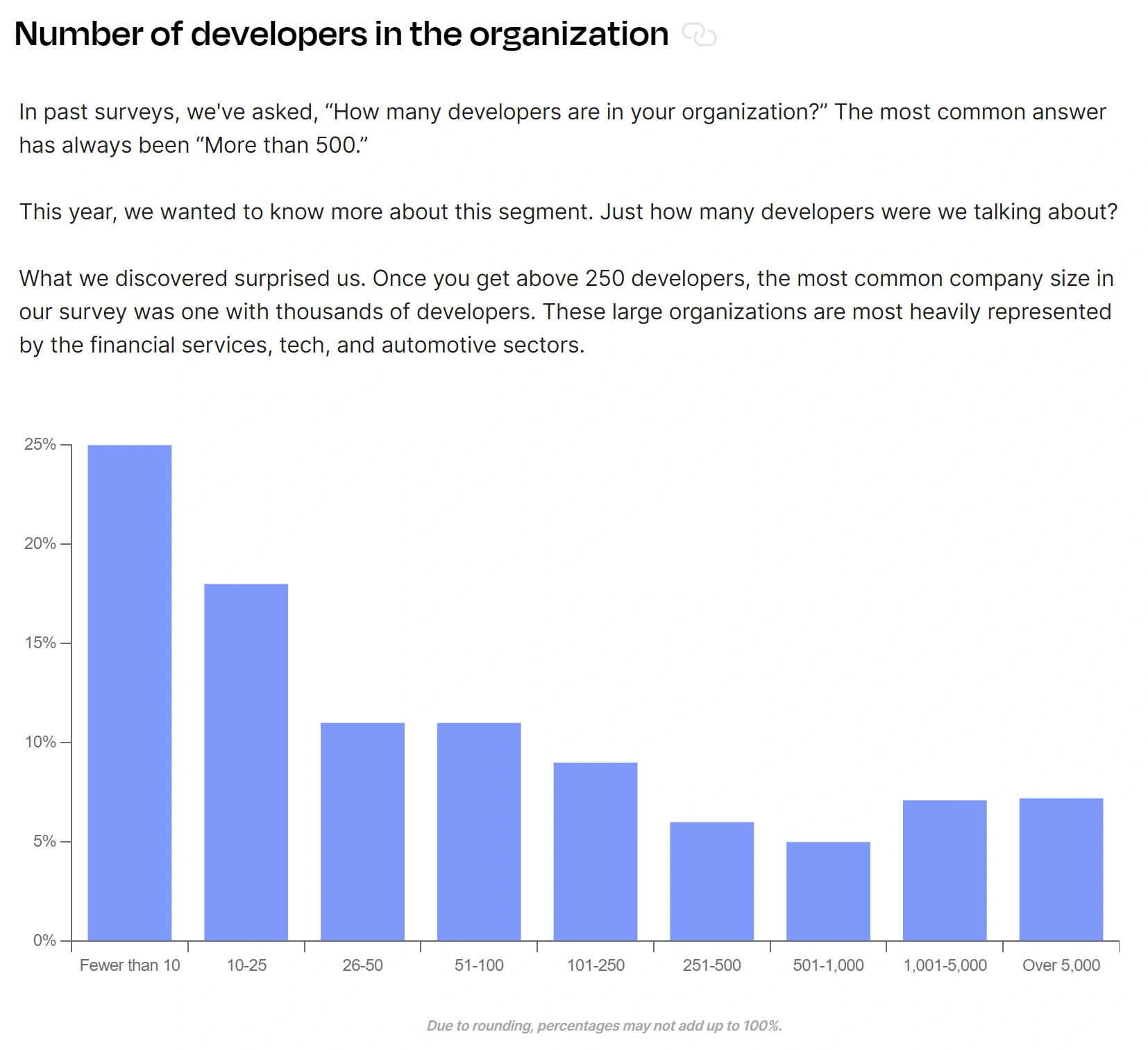
How many Team Members?
marketing agency
- most agencies should have 10-20 active clients for maximum profits and minimum headaches.
- Another source suggests that agency leaders should be mindful of the "heartbeat" of their organization, ensuring it's sustained by many people rather than relying on a single charismatic founder.
- In terms of team size, one account manager shared their experience managing 60 clients, with a junior analyst team handling the day-to-day work. Another individual mentioned having 4-6 core clients, with themselves and one junior person handling the work.
A small to medium-sized agency might have a team of 2-5 people, handling a manageable number of clients (10-20) and focusing on a specific niche or service offering. A larger agency might have a team of 10-20 people, handling a larger client base (20-50) and offering a broader range of services. Agencies with a high volume of clients (50+) might require a larger team of 20-50 people, with specialized roles and departments (e.g., account management, creative, analytics).
Keep in mind that these are rough estimates and may vary depending on factors such as:
- Agency size and scope
- Service offerings and niches
- Client complexity and requirements
- Team structure and roles
- Agency culture and workflow
Game Studio
small-tier game development: (around 10-50 people)
- Small to Medium Studios: These studios usually have teams of 15 to 50 people, focusing on smaller-scale projects.
Indie Games
- Typically, a solo developer (1 person) or a small team of up to 10 people can develop a game.
For a bare minimum, a small-tier game development team would require
- Programmer: 1
- Designer: 1
- Project Manager: 1
- Tester/Quality Assurance: 1
This team of 4-5 people can handle the core development, design, and testing aspects of a small-tier game. However, it's worth noting that having a producer involved can be beneficial for marketing and publishing purposes, even in small teams.
Keep in mind that these numbers are general estimates and may vary depending on the specific project's scope, complexity, and genre.
Career Paths
- career progression
bridging the gap between marketing and design teams
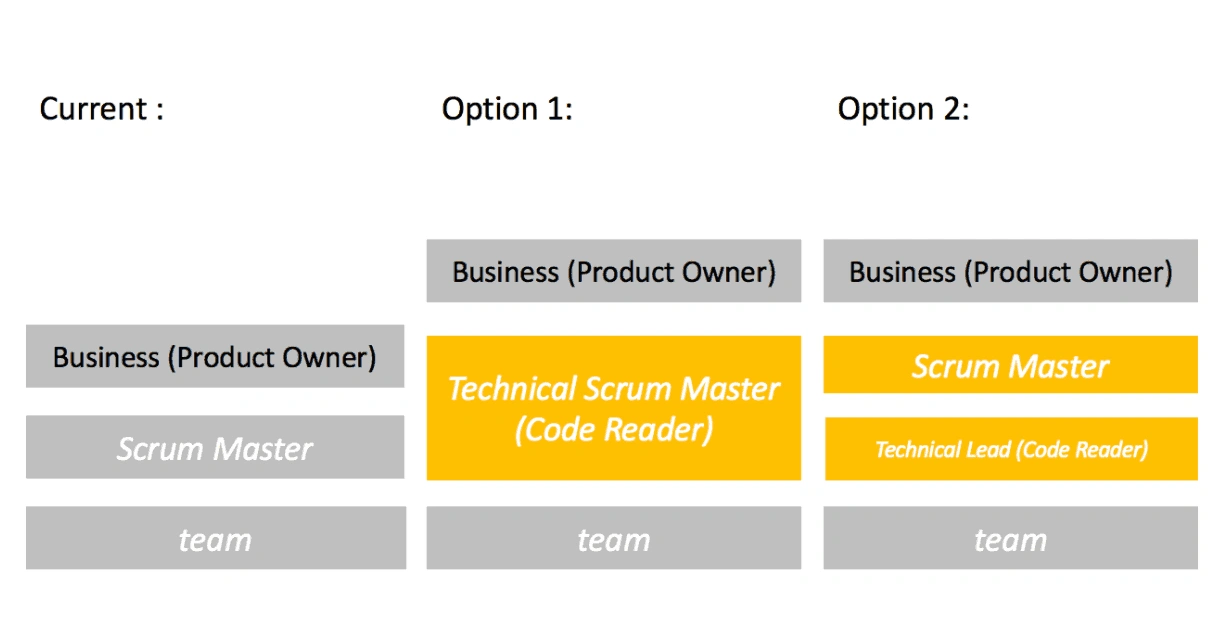
There is no QA role in an agile team
because devs have to do it all and focus on quality. devs don't push defective code in the first place
Agile project iterations are designed to enable teams to respond quickly and efficiently to changes in project requirements and customer needs. As a result, organizations may need to make changes to their team structure or organization design in order to fully adopt an agile approach.
common changes that organizations make during agile project iterations include
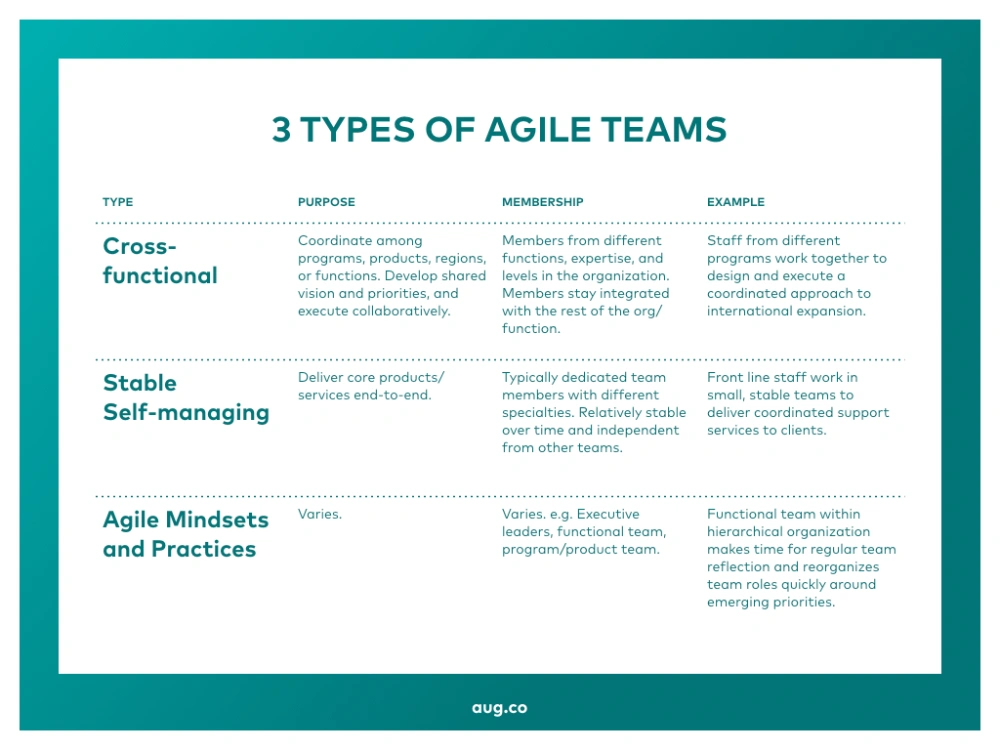
Cross-functional teams
Agile teams are typically cross-functional, meaning they include members with different skill sets and expertise. This allows the team to work together more efficiently and effectively, and to quickly adapt to changes in project requirements. Organizations may need to restructure their teams to create more cross-functional teams.
Self-organizing teams
Agile teams are also self-organizing, meaning they have the autonomy to make decisions about how they work and how they allocate their resources. This can help teams to be more responsive to changes in project requirements, and to work more efficiently. Organizations may need to give their teams more autonomy and support them in becoming self-organizing.
Smaller teams
Agile teams are typically smaller than traditional project teams, which can help to improve communication and collaboration within the team. Organizations may need to reduce the size of their teams to enable them to work more effectively in an agile environment.
Flexible team composition
Agile teams are often composed of members who can be added or removed as needed, depending on the requirements of the project. This allows teams to quickly adapt to changes in project requirements and to work more efficiently. Organizations may need to create a flexible team composition model to support this approach.
Agile coaches
Organizations may need to hire agile coaches or consultants to support their teams in adopting an agile approach. These coaches can provide guidance on agile methodologies, help teams to identify areas for improvement, and support the organization in making necessary changes to their team structure or organization design.
Overall, the changes that organizations make to their team structure or organization design during agile project iterations are intended to support greater flexibility, collaboration, and efficiency, and to enable teams to respond quickly to changes in project requirements.
product-aligned & capability-aligned
two dominant approaches to organizing teams in modern organizations, both approaches have trade-offs and can be combined for best effect:
Product-aligned teams are organized around specific individual products, giving them autonomy and end-to-end ownership but leading to suboptimal business outcomes, cost inefficiencies, and data silos.
Capability-aligned teams are organized around common services/features/functionality used in many or all of the company's products. Allowing for powerful internal ecosystems, joined-up customer experiences, and rich data analysis but requiring higher coordination and potentially complicated funding.
the trade-offs:
-
including decision-making autonomy
-
end-to-end technical ownership
-
financial self-sufficiency
-
reduced organizational politics
-
innovation speed
-
optimized user experience
-
sub-optimal business outcomes
-
cost-inefficiencies
-
high opportunity costs
-
neglected non-core sub-capabilities
-
poor overall user experience
-
data silos
-
lack of cross-pollination
-
powerful internal ecosystems
-
deep 3rd party integrations
-
joined-up customer experiences
-
cost-efficiency
-
rich data analysis
-
deep innovation
-
flatter structure
-
higher-coordination at the program level
-
reduced autonomy and speed
-
complicated funding
-
lack of customer perspective
-
selfish silos
-
empire building
-
overly-complex generic capabilities that suit nobody
-
ecosystem overhead
-
and hard convincing internal customers to use the capability.
-
1 Business Owner
-
2-5 Cofounders / Business Partners
-
6-10 Scrum Team
-
11-25
-
26-50
Group Development
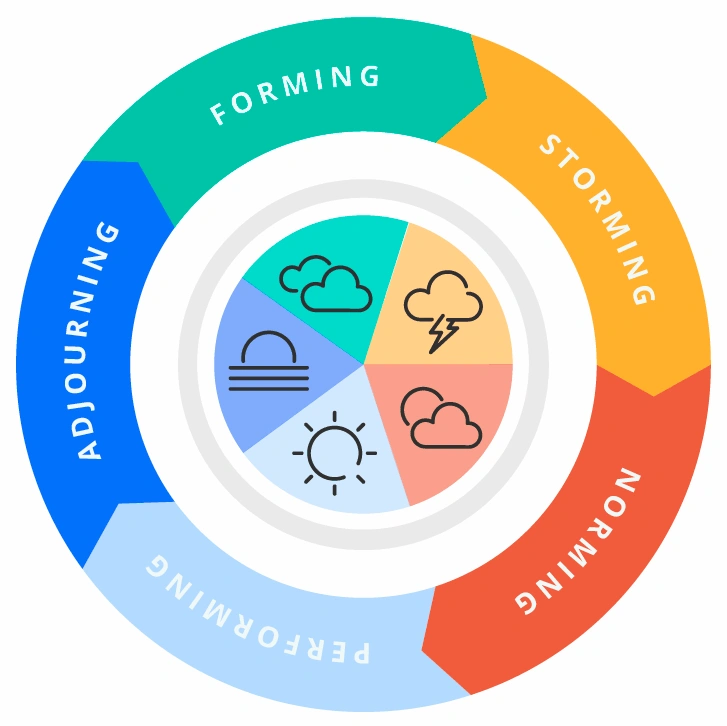
Forming The team meets and learns about the opportunities and challenges, and then agrees on goals and begins to tackle the tasks. Team members tend to behave quite independently. They may be motivated but are usually relatively uninformed of the issues and objectives of the team. Team members are usually on their best behavior but very focused on themselves. Mature team members begin to model appropriate behavior even at this early phase. The meeting environment also plays an important role to model the initial behavior of each individual. The major task functions also concern orientation. Members attempt to become oriented to the tasks as well as to one another. Discussion centers on defining the scope of the task, how to approach it, and similar concerns. To grow from this stage to the next, each member must relinquish the comfort of non-threatening topics and risk the possibility of conflict.
Web Call Tools
 \
\
Teamwork
Yes, "There's no I in Team" can be a harmful platitude. While it emphasizes the importance of teamwork and collaboration, it can also overlook the value of individual contributions and unique perspectives. Here are some reasons why it's problematic:
- Negates individuality: It suggests that individual identity and contributions should be suppressed in favor of group harmony.
- Discourages constructive conflict: It can create a culture of conformity, preventing healthy debate and the exchange of diverse ideas.
- Oversimplifies teamwork: Teamwork is more than just avoiding conflict; it involves effective communication, mutual respect, and the ability to leverage individual strengths.
A more balanced perspective might be: "Great teams value both collaboration and individual contributions." This acknowledges the importance of teamwork while recognizing that the strength of a team often lies in the diversity and unique talents of its members.
Competitive Edge
our competitive edge comes from our meticulous approach, unrelenting integrity (we highly value honesty and transparency), and we give our clients tech support, training, and local competitor comparison so that their web design projects are completed with greater success, precision, and polish.
Build Then Market is your strategic partner for success!
We use advanced AI to deliver cutting-edge websites and apps-so you can move faster, smarter, and with confidence. Our innovative software streamlines business development, lead generation, and market entry, helping your team expand reach and convert strategy into action.
Whether you're launching a disruptive idea or scaling an established company, we provide expert consulting and platforms that reduce friction, accelerate growth, and enable you to lead. From defining go-to-market strategies to facilitating transactions in high-growth sectors, we help you build markets-not just chase them.
With Build Then Market, we partner with your business to define your strategy and build a thriving market for your groundbreaking solutions.
MarketIntelligence BusinessDevelopment Innovation Platform Scaling GrowthStrategy
Analysis of the Gaps in Your Market
- The "Tech Audit" Lead Magnet: Almost none of the competitors listed above (1-25) offer a "Code/Tech Audit" for SMBs. They focus on "Free Quotes" or "SEO Audits." Your background in code audits is a massive differentiator.
- Agile for SMBs: While firms like Hudson Integrated mention "Agile," they rarely explain how it benefits a small business owner. Since you run a small agile tech firm, you can market "Agile" as "Lower Risk / Faster Shipping" for founders.
- Low-Code/No-Code Empowerment: Most of these firms want to keep the client on a retainer for small changes. Your "Heart Led" mission to empower through education suggests you should market "Sites you can actually manage yourself." This builds immense trust compared to the "Retainer-lock" model of SmartSites or Peppermonkey.
The web design industry is currently in the later stages of the growth stage in the product life cycle curve. The market is headed towards the saturation stages and will reach it within the next five years. Knowing this, BUILD then MARKET will target customers who primarily fall into the late majority and laggard categories on the Rogers Adoption of Innovation curve. The target audience is composed of business owners and individuals who are late to get their website or any other software technology set up to meet industry expectations. The software should sell itself as the decision makers would be aware of the offerings they lack to remain competitive in their industry. Based on this curve, our main target consumer base makes up roughly 50% of small business owners who either want or need an upgrade right now. Our secondary customer base will be comprised of early adopters who feel it is necessary that they start branding themselves online. These people include entrepreneurs who either want to brand their image and reputation as well as those who want to build their first online store. Many will even fall into the category of those who want an e-commerce website up in order to secure a second form of income. The early adopters can also include high-end doctor, lawyer, and financial personnel who want to market their services online through their own independent website with our analytical dashboard.
We believe that our website would be most appealing to aspiring entrepreneurs and starting small business owners that include shops and stores (non-franchise), local restaurants, movie theaters, bars and clubs, small deli establishments, people who want their first online store presence, bloggers, artists, recreational parks, and entertainment places. Our website would also target educational markets such as schools and libraries as well as teachers who want to brand their own image or create coursework templates online. Our focus would mainly be on first-time business owners and first-time website administrators. Ideally, we would like to venture into the mid-sized market as well, but fierce competition and little reputation would prevent us from doing so early on. However, we can easily reach out to small-business owners anywhere domestically in the United States and around the world. Geographically speaking, BUILD then MARKET will set its sights on potential customers in the Tri-State area and in the Northeast, but being a virtual company location will not be an issue. We also believe in establishing user personas, meaning that we will set up websites based on specific client demands and market based customization. For instance, a restaurant owner's website will consist of many different pages and tabs, including menus, contact information, and delivery options. Many of our customers will probably appeal to niche markets or alternate substitutes for existing products. We will use our expertise to help them figure out how to capture a particular market, such as novelty or less popular avenues. Our edge lies in the combined services and advanced analytical tools we can offer a broad range of clients. We also plan to invest at least 50% of our retained earnings back into the business to keep it growing.
USPs
- in every web development project, we do a meticulous competitor comparison so that our clients can make their web design with greater precision.
types of leverage
Naval Ravikant, a prominent entrepreneur and investor, has outlined four types of leverage that can be applied to create wealth and scale businesses effectively: labor, capital, code, and media. These concepts are particularly relevant to tech startups, where leverage is critical for rapid growth and impact. Below, I explain how each type of leverage can be applied to a tech startup, based on Naval's ideas and their practical implications.
1. Labor Leverage
Definition: Using other people's time and skills to amplify your output. This involves hiring or collaborating with employees, contractors, or partners to perform tasks that scale your business.
Application to a Tech Startup:
- Hiring Talent: A startup can hire engineers, designers, or marketers to build and promote the product. For example, a founder with a vision for a SaaS platform can leverage a team of developers to code the product faster than they could alone.
- Outsourcing: Use freelancers or agencies for non-core tasks (e.g., graphic design, customer support) to focus on high-value activities like product development or strategy.
- Challenges: Managing people is complex and requires strong leadership. Poor hires or misaligned incentives can reduce effectiveness. In a tech startup, cultural fit and technical expertise are critical to avoid wasted resources.
- Example: A startup like Airbnb leverages a team of engineers to maintain its platform and customer service reps to handle user inquiries, allowing the founders to focus on strategic growth.
2. Capital Leverage
Definition: Using financial resources to amplify your business's reach and capabilities. This involves raising or investing money to scale operations, acquire assets, or accelerate growth.
Application to a Tech Startup:
- Raising Funds: Secure venture capital, angel investment, or crowdfunding to invest in product development, marketing, or hiring. For instance, a startup might raise $1M to build a scalable cloud infrastructure.
- Reinvesting Revenue: Use profits to fund growth initiatives, such as expanding server capacity or entering new markets.
- Paid Marketing: Allocate capital to advertising (e.g., Google Ads, social media campaigns) to acquire users quickly and test product-market fit.
- Challenges: Capital leverage requires discipline to avoid wasteful spending. Startups must balance growth with sustainable unit economics to avoid burning through cash.
- Example: Companies like Uber used massive capital infusions to subsidize rides and expand globally, capturing market share before competitors.
3. Code Leverage
Definition: Using software and technology to create scalable systems that operate with minimal human intervention. Code allows you to automate processes and reach millions of users.
Application to a Tech Startup:
- Building Scalable Products: Develop software that serves users 24/7 without proportional increases in cost. For example, a startup like Dropbox created a cloud storage solution that scales to millions of users with minimal marginal cost per user.
- Automation: Use code to automate repetitive tasks, such as billing, user onboarding, or data analysis. Tools like Zapier or custom APIs can streamline operations.
- Open-Source or APIs: Leverage existing codebases (e.g., open-source libraries) or third-party APIs (e.g., Stripe for payments) to build faster and cheaper.
- Challenges: Requires technical expertise and ongoing maintenance to ensure reliability and security. Poorly written code can lead to technical debt.
- Example: Instagram scaled to millions of users with a small team by leveraging code to handle photo uploads, feeds, and notifications automatically.
4. Media Leverage
Definition: Creating content (text, audio, video) that can be distributed at near-zero marginal cost to reach a large audience and build influence or brand.
Application to a Tech Startup:
- Content Marketing: Produce blogs, videos, or podcasts to attract users and establish thought leadership. For example, a fintech startup might create YouTube tutorials on personal finance to drive brand awareness.
- Social Media: Share engaging content on platforms like X or TikTok to build a community and attract customers. Viral content can lead to exponential user growth.
- User-Generated Content: Encourage users to create content (e.g., reviews, testimonials) that promotes the startup organically, as seen with platforms like Yelp.
- Challenges: Creating high-quality, consistent content requires time and creativity. Measuring ROI on media efforts can also be difficult.
- Example: Notion grew its user base through media leverage by creating templates and tutorials shared across social platforms, driving organic adoption.
Key Considerations for Tech Startups
- Synergy of Leverage Types: The most successful tech startups combine multiple forms of leverage. For example, a startup like Slack used code (scalable software), capital (VC funding), labor (a talented team), and media (content marketing and word-of-mouth) to grow rapidly.
- Permissionless Leverage: Naval emphasizes that code and media are "permissionless" (you don't need anyone's approval to use them), making them especially powerful for early-stage startups with limited resources.
- Long-Term Focus: Leverage compounds over time. A startup that invests in reusable code or evergreen content (e.g., a viral explainer video) can see outsized returns as the business scales.
Sources and Context
Naval Ravikant discussed these concepts in his famous "How to Get Rich" Twitter thread (now on X) and podcast interviews, emphasizing that wealth creation in the modern era relies on leveraging tools and systems. For tech startups, these principles are particularly actionable due to the industry's focus on scalability and automation. While I didn't pull specific posts from X or recent web data (as per your preference for no external sources unless necessary), the explanations above align with Naval's publicly shared ideas and their practical application in the tech startup ecosystem.